
Why Your Heel Hurts in the Morning (and What to Wear at Home)
Short answer: Heel pain with your first steps in the morning is the most common sign of plantar fasciitis. Overnight, the band of tissue along the bottom of your foot tightens, and your first steps stretch it suddenly. Stretching before you stand, and stepping into supportive shoes instead of going barefoot, eases that first-step pain for most people.
Why does my heel hurt so much when I first get up?
While you sleep, your foot rests pointed down and the plantar fascia, the thick band of tissue that runs from your heel to your toes, shortens. Your first steps pull it tight all at once. That's why the pain is often sharp at first and eases after a few minutes of walking. The same thing can happen after you've been sitting for a while.
Is it always plantar fasciitis?
Not always. Achilles tendon problems, a heel spur, a stress fracture or a pinched nerve can also cause heel pain. If the pain is at the back of your heel, comes with numbness or tingling, or started after an injury, see a podiatrist.
What can I do before I get out of bed?
- Towel stretch. Loop a towel around the ball of your foot and gently pull your toes toward your shin for 30 seconds. Repeat three times on each foot.
- Ankle alphabet. Trace the letters of the alphabet in the air with each foot to warm up the joint.
- Shoes by the bed. Keep a supportive pair right next to the bed and put them on before your first step.
Find My Pair: Take the 60-Second Shoe Finder
Does walking barefoot at home make it worse?
For many people, yes. Tile, hardwood and laminate floors give your arches no support and your heels no cushioning. Soft, flat slippers aren't much better, because your arch still collapses with every step. Most of us spend more of the day at home than we used to, so what you wear indoors matters as much as your outdoor shoes.
What should I wear around the house?
Look for the same things you'd want in a good walking shoe:
- Firm arch support that doesn't flatten when you press on it
- A deep heel cup that holds your heel steady
- Cushioning under the heel to soften each step on hard floors
- An easy slip-on fit, so you'll actually put them on first thing in the morning
Every Therafit shoe has built-in orthotic arch support, a deep heel cup and removable Personalized Comfort Adapters, so you can choose soft, medium or firm support under your heel. See how the technology works.
Supportive slip-ons customers reach for first thing

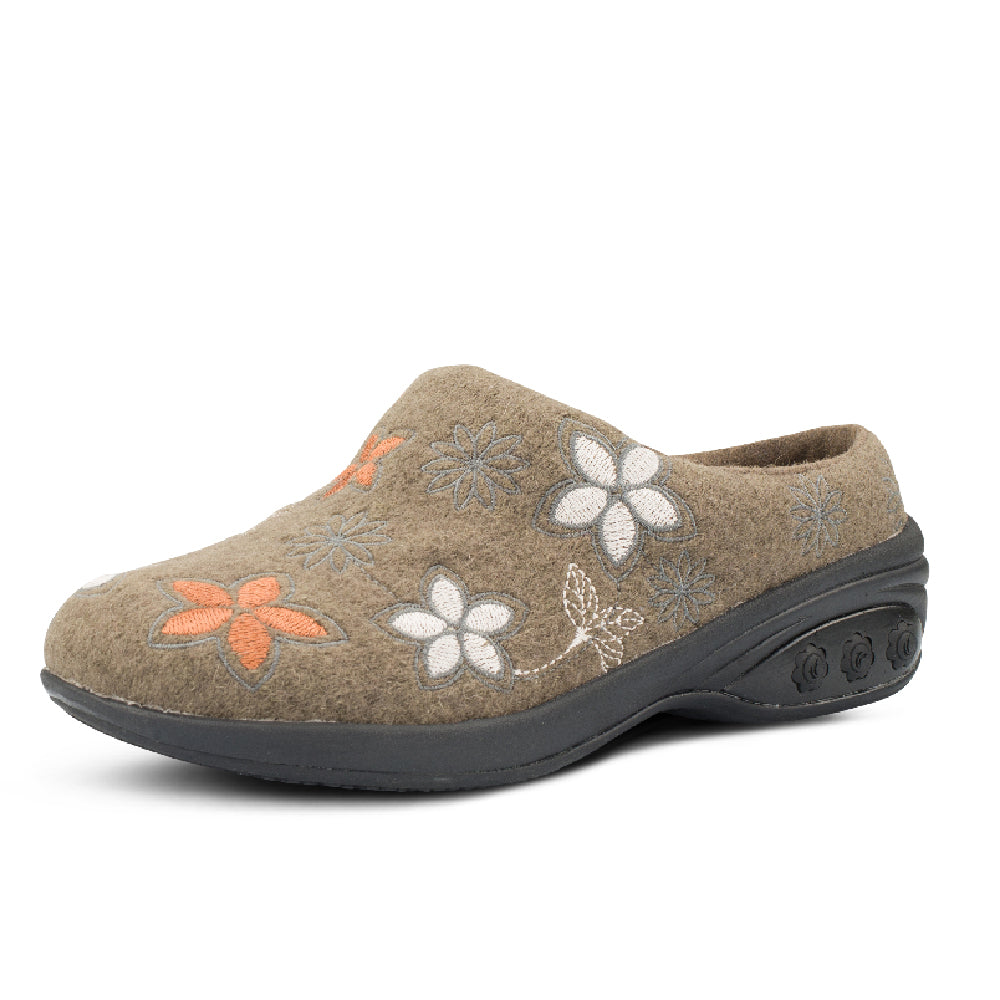
Angela Wool Clog Slip-On: a warm wool clog with built-in arch support. Easy to step into on cold mornings, and wide widths are available.

Austin Lite Women's Slip On Clog: a lightweight clog with a deep heel cup, for the house, errands and long days on your feet.

Paloma Lite Women's Athletic Sneaker: our lightest walking shoe, for when the morning stiffness has eased and you're ready to move.
What else helps during the day?
- Stretch your calves against a wall or step a few times a day. Tight calves pull on the plantar fascia.
- Roll the arch of your foot over a frozen water bottle for about 10 minutes in the evening.
- Wear supportive shoes for errands and walks, not just at home.
- Replace shoes when the heel looks worn or the cushioning feels flat.
When should you see a podiatrist?
See a podiatrist if morning heel pain lasts more than a few weeks, keeps getting worse, makes you limp, or comes with swelling, numbness or tingling. Supportive shoes help, but they don't replace a diagnosis.
Frequently asked questions
Why does heel pain get better after I walk around?
The plantar fascia loosens as it warms up. The pain often comes back after long periods of standing or sitting.
Are slippers bad for plantar fasciitis?
Flat, soft slippers with no arch support can make it worse. Choose a slip-on with real arch support and a heel cup.
How long does morning heel pain last?
It varies. With good support and regular stretching, many people improve over several weeks to a few months.
Can I use my own orthotics in Therafit shoes?
Yes. The insole is removable, so most custom orthotics fit.
Related reading: Shoes for plantar fasciitis · Knee pain and your shoes
This article is for general information and isn't medical advice. If you have ongoing foot pain, talk with a podiatrist or your doctor.

